What is the life of a refugee?
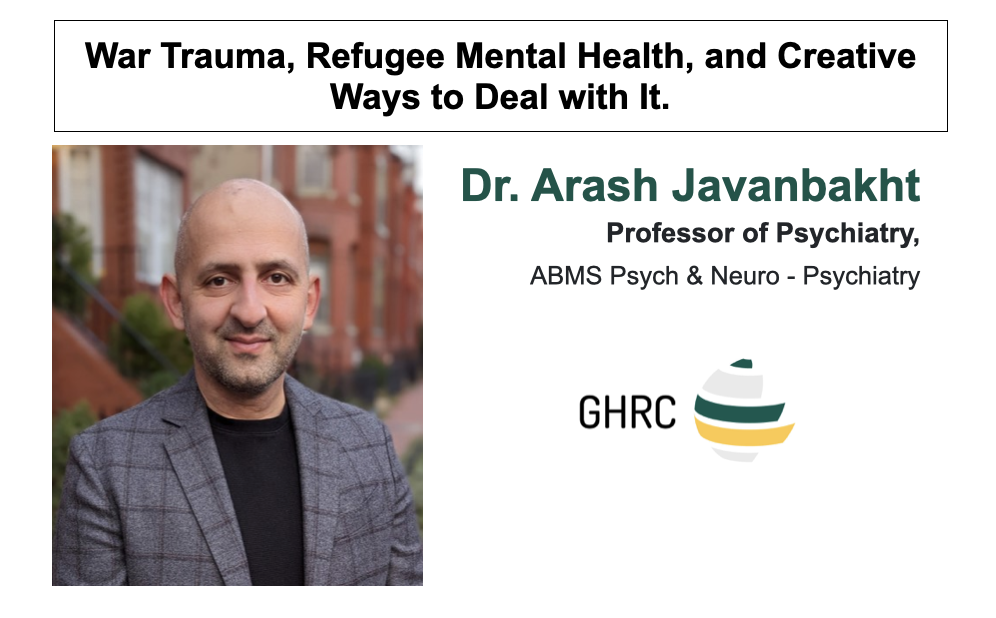
Dr.Javanbakht commenced the seminar by setting the imagery of the life of a refugee. Imagine one day you wake up to the sound of explosions. You may not have electricity or running water. If you have a baby, you need to get formula and don’t know where to go to get it or how to keep your child safe. And as a civilian, you don’t have training to protect yourself. You feel helpless.
Let’s say some individuals are able to leave their hometown while others are not. Those who do leave may receive notice that they will be departing to a place they might not know well, with different rules and a different culture. Essentially, you start over; the title or previous job you had in your home country is no longer applicable in your new foreign residence. You then get dropped into a country where you are met with minimal resources, and you don’t know the language. Essentially you have to rebuild your life from scratch while navigating a new, foreign place.
The Psychological and Biological impact of Forced Displacement
Long story short, a lot goes into the experience of a refugee that feeds into stress and cumulative trauma. Understanding this, and also having joined Wayne State amidst the Syrian War, Dr. Javanbakht was led to explore the question: “What is the impact of war exposure on Syrian refugees and Syrian Children?”. Dr. Javanbakht and his team continue to answer this through the use of prevalence of consequences of trauma in children and adults, family, environment, genetics/epigenetics, autonomic and inflammatory biomarkers, and interventions.
What the Research Reveals About Trauma and Refugee Mental Health
Through this research, important findings emerged. Specifically, 32.5% of Syrian adult refugees in Michigan showed Post-Traumatic Stress Disorder (PTSD), a rate similar to that seen in Vietnam War veterans. Additionally, children of refugees were found to have increased separation anxiety. Individuals with PTSD also had higher rates of depression and/or significant anxiety. Perceived health status and exposure to adversity were also associated with depression. Over time and at follow-up, PTSD scores did not significantly improve among adult refugees, suggesting that time alone does not necessarily heal trauma. In fact, some individuals experienced worsening PTSD symptoms over time. Maternal distress was also found to be correlated with child symptoms.
Although maternal distress was also found to be correlated with child symptoms, it was found that the lower the parents’ environmental stress, the better the improvement in children’s symptoms. These are important findings as they show how we can best support refugees through housing, health services, finances, and social and government support.
Innovative Approaches to Healing and Support
When it comes to providing care to refugees, there are high cultural barriers to accepting trauma and, consequently, seeking treatment. Additionally, there are barriers to accepting medication, as well as concerns about unwanted side effects, which can make pharmacotherapy more difficult to implement.
Creative ways that STARC has used to to help with trauma healing includes:
- Art and movement based interventions for children
- Yoga for mothers
- AI-enhanced mixed reality to help refugees who are non-native English speakers navigate unfamiliar environments, learn English, and practice interacting in different settings, helping them become more comfortable in everyday situations such as grocery stores and social interactions.
Key Takeaways and Broader Implications
Overall, Dr. Javanbakht and his team highlight the critical importance of this research in better supporting the integration of refugees into unfamiliar countries and systems. A central message of his work is that no two refugees share the same experience. Each individual carries a unique history shaped by differences in trauma, loss, and resilience. As such, there are multiple barriers and challenges that his team and others continue to address in order to deepen our understanding of trauma and improve pathways to healing.